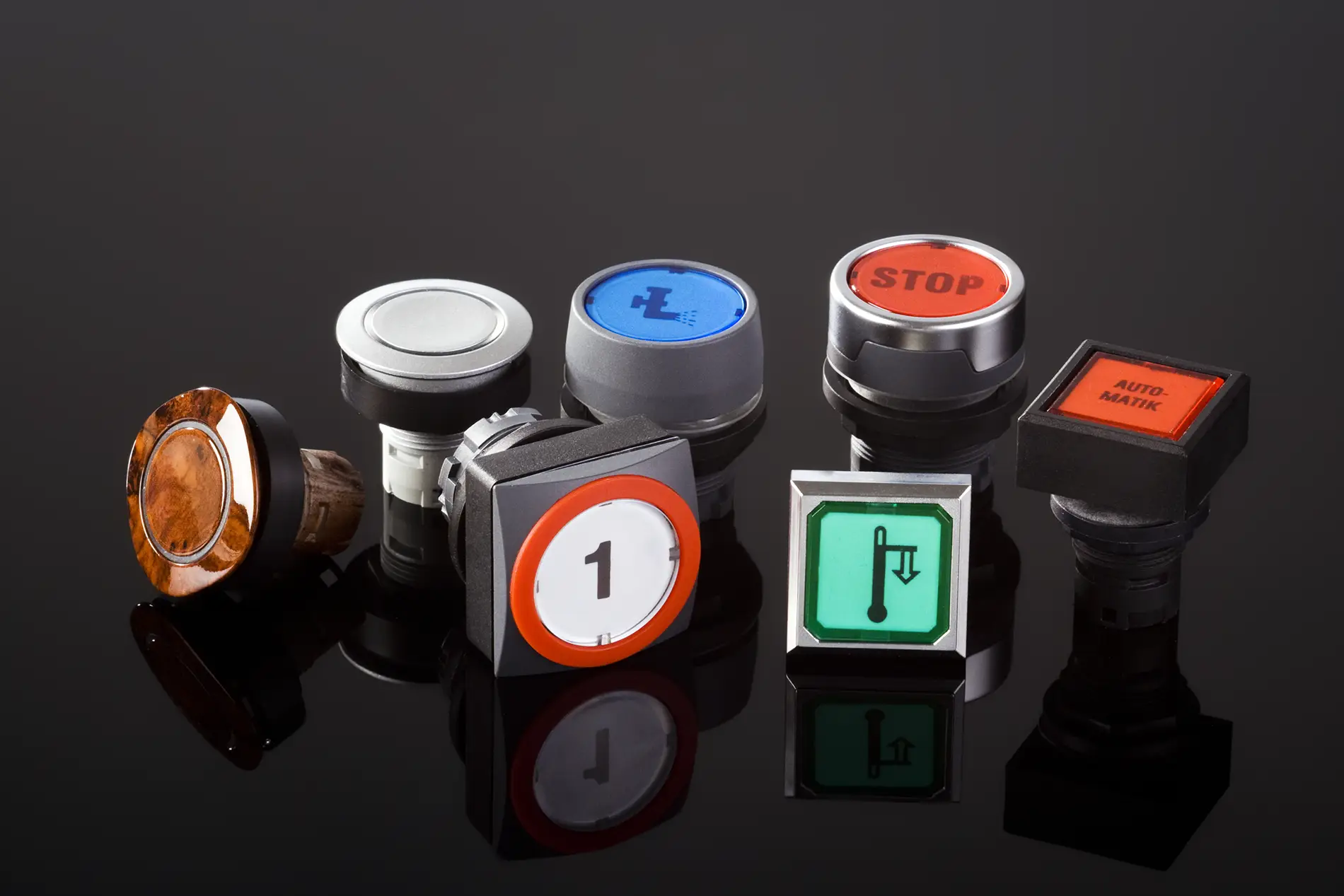
Momentary and latching pushbuttons in the industry: applications, properties, operating principle
Pushbuttons are among the mostly used control units in the industrial control technology and enable starting, stopping and controlling of machines and plants. Even though pushbuttons appear to be technically simple, the correct choice can determine safety, reliability and operating comfort significantly.
In this post, you will learn about basic information about pushbuttons and the right selection of a pushbutton from user's perspective.
Basic principle of momentary and latching pushbuttons
What is a momentary pushbutton?
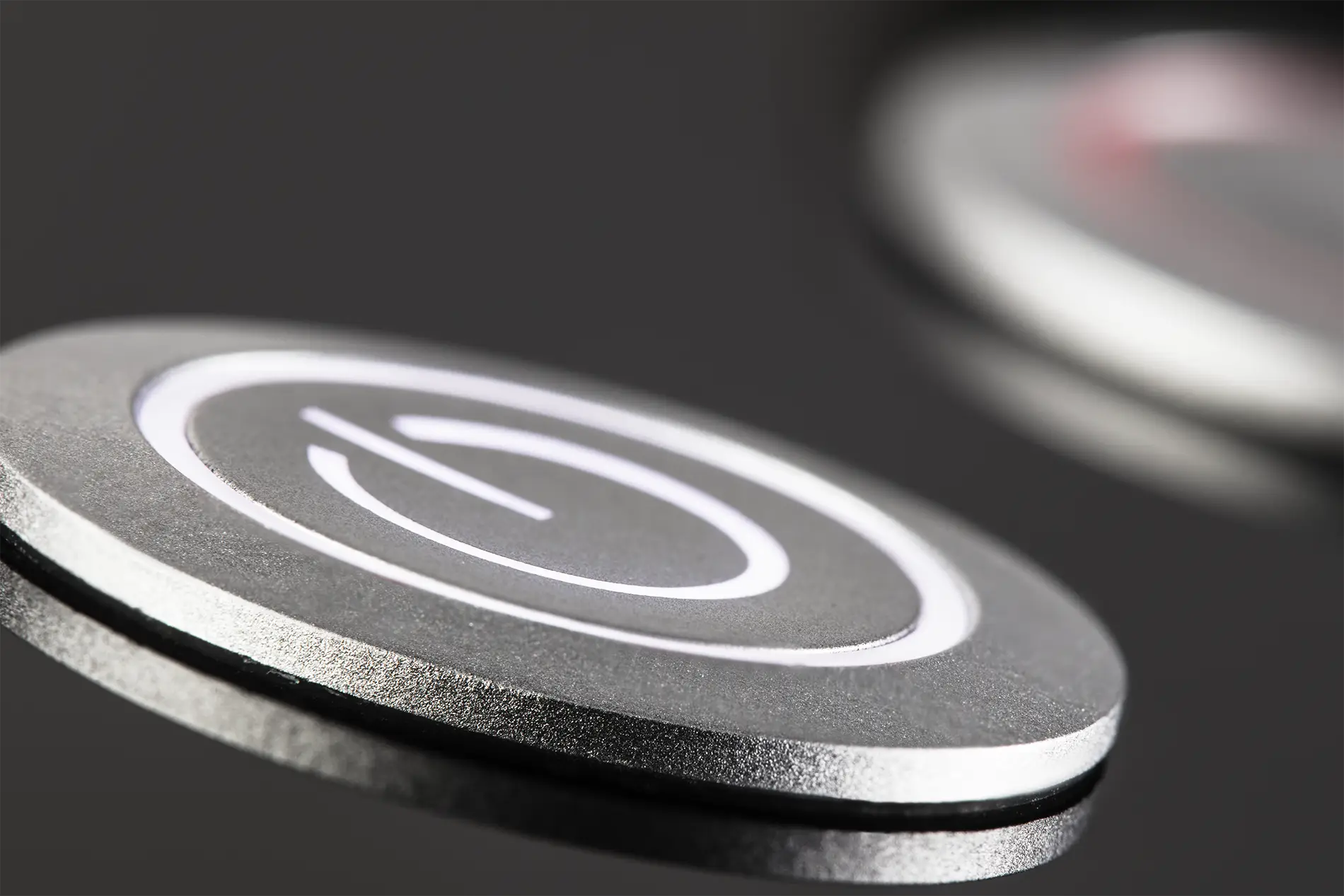
A momentary pushbutton is an electromechanical switching device to control machines and plants. A momentary pushbutton closes or opens an electrical contact only when being activated. After releasing the button, it automatically returns to its idle position. This momentary function differentiates the pushbutton from a latching pushbutton where the button stays in the activated position. Thus, momentary pushbuttons are ideal for operating commands which do not require a constant signal.
- activation of a control impulse
- targeted interruption of a power circuit
- acknowledgement or resetting of a status
What is a latching pushbutton?
A latching pushbutton closes or opens an electrical contact when being operated and afterwards remains in this switching position. Only when operating it again, the latching pushbutton will return to its idle position. Thus, latching pushbuttons are particularly suitable for applications where a continuous switch-on or switch-off signal is required.
Typical tasks are:
- switching on/off of a machine or assembly
- activating of an operating mode
- switching on an illumination
.png?ts=1769078150)
Application of pushbuttons: where and how they are being used
Fields of application
A pushbutton is a component that is being used variably in almost every field of technology – in everyday devices as well as complex controls of industrial machines. Especially in the industrial field they are indispensable as they are a direct, intuitive interface between human and machine.
Pushbuttons are used in various fields:
- machine and plant engineering
- vehicle engineering, automotive industry and transport logistics
- entertainment electronics and household appliances
- medical technology
- building automation
- shipbuilding
In the machine building area, momentary and latching pushbuttons are mainly used for start, stop and reset functions. In the control technology, they serve as manual input elements for PLC systems, while in the medical technology or building automation area, they have to fulfil additional high requirements regarding ergonomics and safety. The respective use thus directly determines the characteristics of the pushbutton.
Operating principle of pushbuttons and switches – relevant points for selection
How does a pushbutton work? The operating principle of the button is based on a mechanical construction of control unit, return spring and one or more contact blocks. If the button is being pushed, the spring gets tensioned and the contact is activated. After releasing, the spring ensures a safe reset.
Contact type
From user´s perspective, the contact type is essential:
- NO – Normally Open: The current flow is only closed when pushing, which is typical for start or release signals.
- NC – Normally Closed: The current flow is being interrupted when pushing, which is preferred for stop and safety functions.
- Inverter: A combination of NC and NO contact for complex control tasks.
Why more than one NO or NC contacts may be necessary
In many industrial application areas, just one contact is not enough. This is why pushbuttons are often equipped with more than one NO or NC contacts. A central reason for this is the separation of different circuits. Control, alarm and lighting circuits often use different voltages or have not the same safety requirements and thus should be switched separately.
This point is especially relevant for safety-oriented functions. For stop or emergency-stop applications, several NC contacts are state of the art. They enable a redundant switch-off and monitoring via safety relays or controls. This makes errors like contact weld recognisable and a safe status can be established.
Furthermore, several contacts make a functional separation possible:
- one contact activates the control command,
- another one signals the status to the control,
- an additional contact controls the visual display.
This allows simple logical functions to be implemented directly via the pushbutton, without using additional hardware.
Features of a pushbutton: what users should consider
Apart from the function, the mechanical and electrical features play a significant role. This includes the mechanical lifetime, the rated voltage and current as well as the utilisation category, e.g. AC-15 (for the control of larger electromagnetic loads) or DC-13 (control of electromagnets at direct current). The characteristic values of the pushbutton have to suit the respective application to ensure a reliable operation.
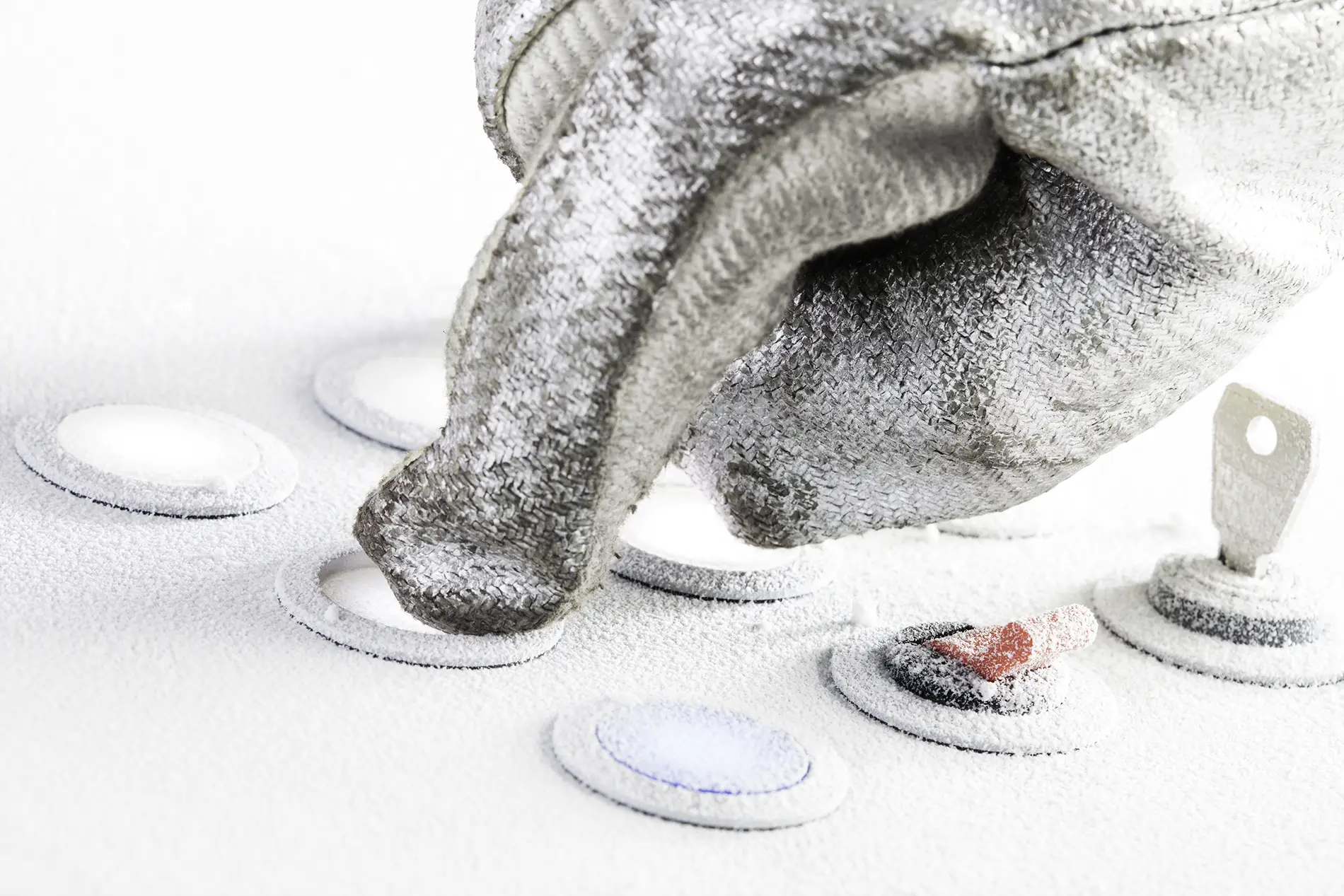
IP degree of protection: waterproof and protection against dust
Another important point is the IP degree of protection. In addition to protection against intruding dust, it is especially undesirable that liquids enter the pushbutton. The first code number after "IP" indicates the protection against dust, and the second one against liquids. Most pushbuttons typically offer a high level of protection against dust. For users, this concretely means:
- IP65: protection against dust and hose water, typical for machine rooms.
- IP67: protection against temporal submersion, relevant for moist environments.
- IP69K: protection during high-pressure and jet stream cleaning, for example in hygienic areas.
Depending on the application area, this results in clear requirements for the material of the housing/enclosure (plastic or metal ...) and the construction. Stainless steel pushbuttons are often used in areas with high mechanical load, aggressive mediums or strict hygiene regulations.
Pushbuttons: shape, panel cut-out, illumination and modular variants
- panel cut-out: normally, 16.2 mm, 22.3 mm, 30.5 mm diameter and square shapes (23.1 mm, 24 mm, 26 mm) are being offered
- shape: round, square, rectangular, rounded
- mounting depth of the pushbuttons
- colour of the front bezel resp. illumination of the button
Modular pushbutton systems offer further benefits. They allow a flexible combination of control units, contact blocks and illumination, other functions can be added later on and components can be exchanged quickly for service purposes.
Big selection of pushbuttons at SCHLEGEL
Manufacturers like Schlegel use modular systems, robust materials and a consequently industrial design for their pushbuttons. The products are exclusively "Made in Germany" and cover all common panel cut-outs and shapes. Users can choose between variants with short or long stroke and configure pushbuttons with various combinations of NO and NC contacts.
Apart from the functionality of the control units, Schlegel also attaches great importance to an appealing design. The company received countless design awards for its solutions.
Standards as a binding basis
Among others, for pushbuttons as industrial switching devices, IEC 60947-5-1 as well as the corresponding DIN EN 60947 apply. Those standards define electrical capacity, mechanical lifetime and safety-relevant characteristics like positive opening. For design engineers and operators, they are the basis for standard compliant, safe machines and plants.
Conclusion
Pushbuttons are simple control units with great technical importance. Their reliable function results from the correct combination of application, contact logics and characteristics. When pushbuttons are consistently selected by taking into account the user's perspective, not only the operating principle, but also the safety requirements, ambient conditions and standards are being considered. Several NO or NC contacts are often a technically neat solution – and a significant contribution to safe, long-lasting and maintenance-friendly industrial controls.